


In 1968, John Stephen Akhwari limped into the Olympic stadium in Mexico City, his leg bloodied and bandaged, long after the marathon had ended. The winner had finished nearly an hour earlier. When asked why he didn’t quit, Akhwari replied, “My country did not send me 5,000 miles to start the race. They sent me to finish it.”
Yet, for all his perseverance, Akhwari’s story reveals a harsh truth: delayed rewards are the silent killers of motivation. His finish line was a distant promise—no cheering crowds, no immediate validation—just the hollow echo of an empty stadium. The brain doesn’t run on willpower alone; it craves the rush of now. And when that rush is missing, even the strongest resolve crumbles.
The lesson? Human nature isn’t wired for “someday.” It’s wired for the thrill of the immediate—the high-five, the bonus ping, the instant dopamine hit that says, “This. This is why you keep going.”
The Psychology of Timing: Why Immediate Rewards Work
Why Delayed Rewards Kill Motivation
Ever noticed how the promise of a future reward—like a year-end bonus—often fails to light the same motivational fire as an immediate pat on the back? That’s temporal discounting in action, a psychological quirk where our brains devalue rewards the farther they sit on the horizon. It’s not just impatience; it’s how memory and emotion conspire to make delayed gratification feel like a raw deal. Think of it this way: when you close a tough sale, an instant commission update triggers a vivid “peak-end experience”—your brain snapshots that win and ties it directly to your effort.
But if that reward gets pushed to next month’s paycheck? The connection fades. The recency effect kicks in, and suddenly, last week’s triumph feels like ancient history. Worse, delays can flip into perceived losses.

Your brain doesn’t just think, “I’ll get it later”—it screams, “I’m being robbed of my win! ” That’s loss aversion hijacking your motivation. Even the goal gradient effect—that burst of energy as you near the finish line—stalls when the finish line keeps moving.
Without interim rewards, long-term projects become marathons with no water stations. In today’s fast-paced world, where instant feedback is the norm, delayed rewards feel like dial-up internet in a 5G era.
The solution? Shrink the gap. Create mini “finish lines” with timely rewards to keep the motivational engine humming 1.
Studies back this up: people who valued immediate rewards—like enjoying their workout—spent more time exercising, even though they said they cared more about long-term health benefits. Delayed rewards?
They barely moved the needle. It’s a stark reminder that what we think motivates us often doesn’t align with what actually keeps us going 2.
How Dopamine Drives Motivation Through Immediate Rewards
Here’s where neuroscience drops the mic: dopamine, your brain’s reward messenger, doesn’t just celebrate wins—it anticipates them. And timing? Everything. When rewards arrive sooner than expected, dopamine surges like a standing ovation, strengthening the neural pathways tied to that behavior.
Delay the reward, and the dopamine fizzles like a flat soda. That’s your brain’s “prediction error” signal—it thrives on surprises, not IOUs. Sales teams with real-time commission updates outperform those waiting for monthly statements because immediate feedback forges ironclad links between action and reward. It’s reinforcement learning in overdrive.
High-quality, prompt rewards? They’re the brain’s equivalent of a gourmet meal—far more satisfying than a stale, delayed sandwich. This dopamine boost isn’t just fleeting joy; it’s the foundation for lasting motivation and behavior change. But here’s the kicker: even when people say they’re in it for the long-term payoff (like health or wealth), their persistence hinges on immediate rewards.
Exercise more when it’s fun? Check. Eat more veggies when they taste good?
Double-check. The brain’s wiring doesn’t lie—it’s wired to chase the now, not the someday 2.
Operant Conditioning: Immediate Rewards, Lasting Impact
Enter operant conditioning, the OG of behavior reinforcement. The rule is simple: behaviors followed by immediate rewards get repeated. Delay the reward, and the connection frays like an old rope. It’s why a “great job!” right after nailing a presentation packs more punch than a generic “attaboy” in next quarter’s review.
But there’s a twist: intrinsic motivation—that inner drive to do something because it’s meaningful—can take a hit when rewards feel disconnected from the effort. Timely rewards, though, act like a high-five to your soul. They validate the grind and supercharge your internal motivation. It’s synergy, not sabotage.
Now, layer in Herzberg’s two-factor model and Maslow’s hierarchy: early-career folks might chase quick cash, while veterans crave timely recognition or growth opportunities. One size doesn’t fit all. And then there’s variable ratio reinforcement—the slot machine effect. Unpredictable but frequent rewards (think surprise bonuses or spontaneous shout-outs) keep engagement sky-high.
Some companies are nailing this with dynamic, milestone-triggered rewards that pop up when least expected. The takeaway? If you want behavior change that sticks, shrink the gap between action and reward.
Make it immediate. Make it meaningful. And watch motivation transform from a flicker to a flame. 2
The Futility of Direct Change: Why You Can’t Control Others (and What to Do Instead)
Why Direct Change Requests Backfire
Ever tried to “fix” someone? Maybe a partner who leaves socks everywhere or a colleague who’s perpetually late? You’ve probably noticed that direct requests—“Just stop doing that! “—rarely work.
In fact, they often backfire, creating more of the behavior you wanted to stop. This happens because people naturally push back when they feel controlled or criticized.
The reason? Humans are wired to resist external control. When you tell someone to change, their brain’s defenses flare up like a security system. It’s not stubbornness; it’s psychology.
Research in attribution theory shows that people attribute their behaviors to internal factors—“I’m late because I’m busy,” not “I’m disorganized. ” When you criticize or demand change, you’re essentially challenging their self-narrative. The result? Defensiveness, resentment, or outright rebellion.
Studies confirm that criticism, even when well-intentioned, often alienates rather than motivates. Instead of direct demands, consider the Dale Carnegie approach: focus on genuine praise. When someone does something right, highlight it. This isn’t about manipulation—it’s about reinforcement.
Positive feedback triggers dopamine, making the behavior more likely to repeat. It’s the same principle behind operant conditioning: behaviors followed by rewards get strengthened. Criticism, on the other hand, often shuts down motivation. 3
Why People Change: Trauma and Insight
If direct change doesn’t work, what does? Two things: trauma and insight. Trauma—whether emotional, physical, or psychological—can force a reassessment of behaviors. It’s abrupt and often painful, but it disrupts ingrained patterns.
Insight, however, is the gentler cousin. It’s the “Aha! ” moment when someone realizes, “Oh, this isn’t working for me. ”
Both are internal processes, not external commands. Naval Ravikant puts it bluntly: “People only change through trauma or their own insight—and never in a way you like. ”
You can’t schedule an epiphany. You can’t force growth.
But you can create an environment where insight is more likely. How? By modeling the behavior you want to see.
If you want a partner to communicate better, you communicate better. If you want a team to be more proactive, you lead by example.
How to Influence Others by Changing Yourself
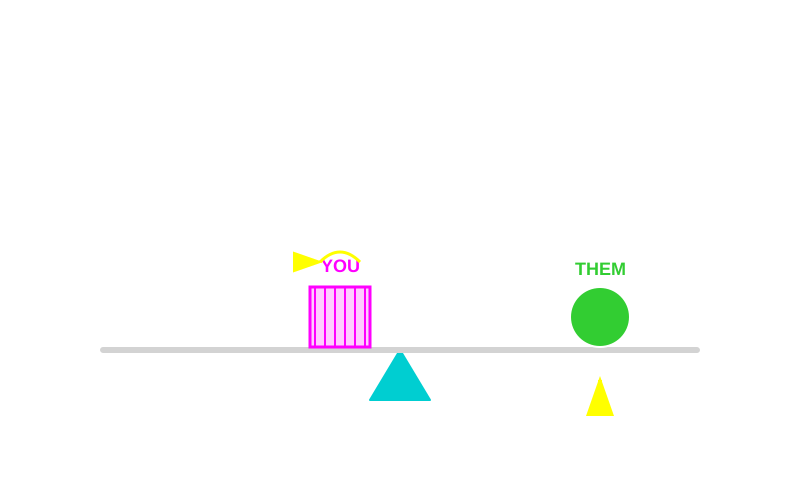
Here’s the paradox: the more you focus on changing others, the less influence you have. The real leverage lies in changing yourself. When you shift your reactions, behaviors, or expectations, you alter the dynamic. It’s like adjusting your end of a teeter-totter—the other side moves too, but indirectly.
Take the Michelle Thomas language-learning method: students learn better when they’re passive observers, not under pressure. Similarly, people change more readily when they’re not under scrutiny. Compliment genuine progress, ignore minor slip-ups, and let them connect the dots themselves. Over time, they’ll associate the behavior with positive outcomes—without feeling controlled.
The takeaway? Stop trying to change others. Instead, change how you engage with them.
Praise what you want to see more of, model the behavior you desire, and trust that insight will follow. It’s not about control—it’s about influence. And influence, unlike control, lasts. 3.
Positive Reinforcement: The Power of Compliments and Immediate Rewards
Transforming Culture with Targeted Encouragement
The Dale Carnegie Method isn’t just about empty praise—it’s about strategic encouragement that builds confidence and reinforces positive behavior. Carnegie’s approach hinges on the idea that people thrive when they feel valued and recognized. Instead of criticizing what’s wrong, the focus shifts to highlighting what’s right. This isn’t about ignoring mistakes but about amplifying strengths to create a self-sustaining cycle of improvement.
Research in behavioral psychology supports this. When you compliment someone immediately after they exhibit a desired behavior, you’re leveraging operant conditioning—the behavior is more likely to repeat. But here’s the catch: the praise must be genuine. People can sniff out insincerity, and fake compliments backfire, eroding trust.
The key is to be specific. Instead of a vague “Great job! ”, try “I noticed how you handled that client call with patience—it really made a difference. ” This specificity ties the reward directly to the action, making it more meaningful and reinforcing.
The method also aligns with Herzberg’s two-factor model, where recognition acts as a motivator rather than just a hygiene factor. For teams, this means creating a culture where immediate, sincere feedback is the norm. It’s not about constant praise but about timely, targeted encouragement that makes people feel seen and valued. When done right, this approach doesn’t just change behavior—it transforms workplace culture.
Michelle Thomas Method: Learn by Observing
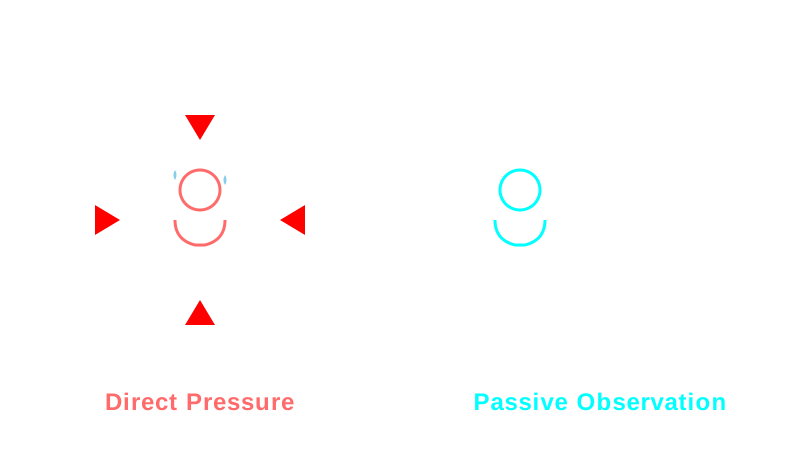
The Michelle Thomas Method flips traditional learning on its head. Instead of putting students under pressure, it turns them into passive observers. Imagine learning a language by listening to a teacher interact with another student—no tests, no grades, just absorption. This reduces anxiety because you’re not in the hot seat.
You’re free to laugh, sympathize, or even critique without the fear of failure. This method taps into a deeper psychological truth: people learn best when they’re not under scrutiny. The brain processes information more effectively in a low-stress environment. Studies show that immediate rewards—like the enjoyment of listening to a fun, engaging conversation—keep people motivated far more than delayed rewards, like future fluency.
It’s why students who enjoy their study materials persist longer than those who focus solely on long-term benefits. Applying this to behavior change, the lesson is clear: if you want someone to adopt a new habit, reduce the pressure. Create an environment where they can observe, experiment, and enjoy the process without feeling judged.
For example, if you want a colleague to improve their presentation skills, invite them to watch a great speaker in action and discuss what worked. The focus shifts from “You need to fix this” to “Here’s something inspiring—what do you think? ” It’s subtle, but the psychological impact is profound.
The Power of Genuine Praise
Compliments aren’t just niceties—they’re neurological power tools. When you receive genuine praise, your brain releases dopamine, the same chemical that drives motivation and reinforcement. This isn’t just about feeling good; it’s about wiring the brain to repeat the behavior that earned the compliment. The timing matters: immediate praise strengthens the connection between action and reward, making the behavior stick.
But here’s the science-backed twist: the praise must be authentic. A study from the Journal of Personality and Social Psychology found that people value intrinsic incentives—like genuine recognition—more than external rewards when they’re immersed in an activity. Fake compliments trigger skepticism, not motivation. The brain’s reward system is finely tuned to detect authenticity, so hollow praise falls flat.
The Michelle Thomas Method and Dale Carnegie’s principles converge here. Both emphasize that behavior change happens when people feel safe, valued, and rewarded in the moment. Whether it’s learning a language or improving workplace habits, the formula is the same: reduce pressure, offer genuine praise, and let the brain’s natural reward system do the heavy lifting.
The result? Lasting change that doesn’t feel forced—because it’s not. It’s human nature at work.
Real-World Applications: How to Implement Immediate Rewards Effectively
How to Boost Motivation with Goal Milestones
Ever felt like you’re running a marathon with no water stations? That’s what long-term goals without milestones feel like. The brain thrives on progress, and when rewards are too distant, motivation fizzles. The solution?
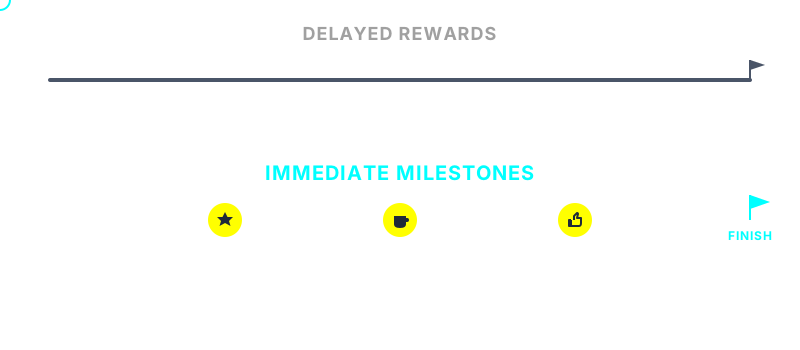
Break the journey into bite-sized wins. Instead of waiting for the year-end bonus, celebrate the small victories—like hitting a monthly target or nailing a key presentation. This isn’t just about morale; it’s about neuroscience. Each milestone triggers a dopamine hit, reinforcing the behavior and keeping the momentum alive.
Take sales cycles, for example. Rewarding only the final deal closure ignores the grind of lead generation, proposal submissions, and negotiations. By incentivizing these interim steps, you combat temporal discounting—the brain’s tendency to devalue distant rewards. Early-stage rewards acknowledge effort, while later-stage rewards reflect value delivered.
It’s like adding pit stops to a race: each one refuels motivation for the next leg. Timing matters too. Mid-month or mid-quarter rewards reignite enthusiasm when the initial excitement wanes but before the final push begins.
Pair this with visual progress trackers—dashboards showing real-time progress—and you amplify the goal gradient effect. Seeing progress makes rewards feel tangible, triggering motivation earlier in the cycle.
And don’t forget frequency: monthly targets create twelve motivation peaks per year, while annual goals offer just one. Layer short- and long-term goals to keep the motivational engine humming.
Balancing Real-Time and Periodic Rewards for Maximum Engagement
Imagine closing a deal and seeing your commission update instantly. That’s the power of real-time feedback—it forges an unbreakable link between effort and reward, flooding the brain with dopamine and supercharging engagement. But here’s the catch: real-time rewards alone aren’t enough. They satisfy the craving for instant gratification, but periodic rewards build anticipation, sustaining motivation over longer cycles.
The magic lies in balance. Real-time feedback works wonders for roles like sales, where immediate results drive behavior. But for extended projects—think research or product development—periodic rewards keep teams engaged through the slog. Studies show that real-time compensation feedback boosts engagement by fostering a sense of control and accomplishment.
Yet, mistimed rewards can backfire, leaving employees feeling disconnected or undervalued. Different industries demand different rhythms. Manufacturing teams might thrive on shift-based feedback, while tech firms could benefit from sprint-based rewards.
The key? Align feedback timing with the natural cadence of work.
For example, a sales rep might need instant commission updates, but a software developer might respond better to milestone-based bonuses tied to project phases. By syncing rewards with these rhythms, you create a reinforcement loop that sustains high performance 1.
How to Avoid Common Reward Timing Mistakes
Even the best-intentioned reward systems can flop if timing is off. One classic blunder? Delaying rewards too long. When the gap between effort and recognition stretches, motivation withers.
The brain craves immediate reinforcement, and delayed rewards feel like broken promises. Another pitfall? Inconsistent timing. If rewards arrive unpredictably—sometimes instantly, sometimes months later—employees struggle to connect actions with outcomes, eroding trust and engagement.
Then there’s the “one-size-fits-all” trap. Assuming every team or individual responds to the same reward timing is a recipe for disappointment. A sales team might thrive on instant gratification, while a creative team could need space to innovate without constant feedback. Misalignment here leads to frustration and disengagement.
Finally, don’t overlook the power of visibility. If rewards are hidden or unclear, their impact diminishes.
Transparency—like real-time dashboards or clear milestone markers—keeps motivation high by making progress tangible. Avoid these timing traps, and you’ll transform rewards from mere incentives into powerful drivers of lasting change.
Data-Driven Personalization: Optimizing Rewards for Maximum Impact
Personalizing Rewards: The Science of Timing and Motivation Templates
Ever wondered why some rewards light a fire under your team while others fall flat? The secret lies in data—specifically, understanding individual preferences and motivation cycles. It’s not just about what you reward but when and how you deliver it. By tracking how employees respond to different timing strategies, you can create personalized incentive calendars that align with their unique behavioral patterns.
This isn’t just guesswork; it’s about leveraging performance profiling to strengthen the connection between effort and reward. Different industries and roles demand tailored approaches. For instance, pharmaceutical sales teams, with their longer decision cycles, need incentives timed to key milestones in the sales pipeline. Meanwhile, fast-moving consumer goods teams thrive on quicker, more frequent rewards.
Even regional differences play a role—what motivates a team in New York might not resonate in Tokyo. Role-based timing templates can help strike the right balance, ensuring senior managers, individual contributors, and support roles each receive incentives that align with their contributions and rhythms. Technology platforms make this personalization scalable.
Automated workflows, customizable notifications, and flexible payout schedules allow organizations to manage diverse timing preferences without losing consistency. But fairness is non-negotiable.
Clear guidelines and transparent criteria ensure that personalization doesn’t breed bias. Regular audits can help identify and correct any unintended disparities, keeping the system equitable and effective.
How AI Personalizes Employee Rewards in Real Time
Imagine a reward system that adapts in real time, learning from each employee’s performance, engagement, and even personal preferences. That’s the power of AI-driven personalization. Machine learning algorithms analyze vast amounts of data—from performance history to engagement levels—to determine the optimal timing, frequency, and type of rewards for maximum impact. Whether it’s an immediate shout-out for a job well done or a strategically delayed bonus, AI ensures the reward lands when it will resonate most.
The real magic of AI lies in its adaptability. Reward schedules can be fine-tuned on the fly to account for shifts in market conditions, team dynamics, or even personal circumstances.
Natural language processing tools add another layer of refinement by analyzing feedback to continuously optimize how and when rewards are delivered. This isn’t just about efficiency; it’s about creating a dynamic system that evolves with your team, keeping incentives relevant and motivating throughout their journey.
The Power of Non-Monetary Incentives in the Modern Workplace
While cash bonuses have their place, non-monetary incentives are stealing the spotlight—and for good reason. Research shows that non-financial rewards can boost productivity by up to 44%, addressing issues like burnout and skill development in ways that money simply can’t. Flexible work arrangements, wellness programs, and professional development opportunities are becoming critical components of modern incentive strategies. Recognition programs, in particular, are evolving with technology.
Peer-to-peer platforms now use algorithms to identify the perfect moments for acknowledging efforts, whether it’s after a major milestone or during a tough stretch when morale needs a lift. The impact is undeniable: well-timed non-financial rewards can lead to a 55% increase in employee engagement, while a lack of recognition doubles the likelihood of employees jumping ship within a year. Technology is making it easier to scale these personalized gestures.
Platforms can track individual preferences and adjust reward timing for personal anniversaries, career milestones, or seasonal events. These thoughtful touches create stronger emotional connections, often delivering more lasting motivation than a cash bonus ever could.
Conclusion
So, what’s the takeaway? Human nature isn’t wired for “someday”—it’s wired for the thrill of the immediate. From the marathon runner who quit at mile 20 to the sales rep chasing a real-time commission update, our brains crave instant validation.
Delayed rewards, no matter how grand, often fail to light the motivational fire because they’re too distant, too abstract. But immediate rewards? They trigger dopamine surges, reinforce behaviors, and create lasting change.
The science is clear: operant conditioning, temporal discounting, and Herzberg’s two-factor model all point to the same truth—timing matters. Whether it’s a genuine compliment, a milestone celebration, or a surprise bonus, the closer the reward to the effort, the stronger the connection. And when you layer in personalization—tailoring rewards to individual preferences and rhythms—you transform motivation from a flicker to a flame.
But here’s the twist: you can’t force change in others. Direct demands backfire, triggering defensiveness and resistance.
Instead, focus on changing yourself. Model the behavior you want to see, create an environment where insight can flourish, and watch as others follow suit. It’s not about control—it’s about influence.
So, as you step away from this piece, ask yourself: where in your life or work could you shrink the gap between effort and reward? How could you leverage immediate reinforcement to drive lasting change? And remember, the most powerful rewards aren’t always the biggest—they’re the ones that feel most meaningful in the moment.


