


I’ve been thinking a lot about this strange paradox: we’re more connected than ever, yet young men are retreating into isolation at alarming rates. Not the kind of isolation that makes you lonely, mind you—just the kind that makes you… alone. Derek Thompson’s work in The Atlantic calls it the “convenience curse,” and it’s rewiring our brains in ways we’re only beginning to understand.
Here’s the thing: we’ve gained 300 hours of leisure time since the 1960s, and what did we do with it? We handed it over to screens. Not because we’re lazy, but because the alternative—actual human interaction—feels like a Herculean task when your brain is fried on dopamine hits from TikTok and Call of Duty. Young men, in particular, are opting out of the messy, rewarding work of friendship, and the numbers don’t lie: face-to-face socializing has plummeted by 40% among unmarried men.
But here’s the kicker: they’re not even lonely. They’ve just traded the “healthy pinch of loneliness” that once drove us to seek out tribe and kinship for the numb comfort of solo sedation. The secular monk’s discipline, the sedentary gamer’s escapism—it’s all the same story. We’ve built lives that don’t require other people, and now we’re wondering why they feel so hollow.
The Paradox of Aloneness: Social Decline Without Loneliness
The Decline of Face-to-Face Socializing and Its Impact on Young Men
The numbers don’t lie: face-to-face socializing in America has plummeted by over 20% nationwide, with young adults and unmarried men seeing drops closer to 40% 1. This isn’t just a blip—it’s a cultural shift with deep roots. Derek Thompson’s work in The Atlantic highlights how technology and convenience have reshaped our social habits, but the decline in in-person interaction isn’t just about smartphones. It’s about how we’ve restructured our lives around solo, sedentary leisure.
Young men, in particular, are spending their free time alone, glued to screens, whether it’s video games, TV, or endless scrolling. The data from sociologist Liana Sayer’s research is stark: single men without kids are overwhelmingly likely to spend their leisure time in isolation, and it’s not just a preference—it’s a pattern with real consequences. What’s fascinating—and troubling—is that this isolation isn’t necessarily making people feel lonelier. Instead, it’s creating a new kind of aloneness, one where the biological cues that once drove us to seek out social connection are being dulled.
The Harvard Study of Adult Development and similar research have shown that relationships are the cornerstone of health and happiness, yet men are increasingly opting out of the very interactions that sustain them 2. The stigma around male friendships doesn’t help. As Paul Kugelman’s story on Hidden Brain reveals, many men feel awkward or even ashamed about reaching out, fearing rejection or judgment.
The result? A generation of men who are physically alone but not necessarily lonely—at least not in the way we traditionally understand it.
Dopamine Overload: How Tech Hijacks Our Social Drive
Here’s where things get even more complicated: our brains are being hijacked. The constant dopamine hits from scrolling, gaming, and binge-watching are rewiring our reward systems. Derek Thompson describes how phasic dopamine—the quick, intense bursts we get from digital stimulation—leaves us with depleted tonic dopamine, our baseline level of motivation and well-being. When your brain is flooded with dopamine from your phone, the idea of going out to meet a friend feels exhausting, not rewarding.

It’s like trying to get excited about a salad after eating a pound of candy. This biochemical shift explains why young people are celebrating canceled plans on TikTok. It’s not that they don’t want connection—it’s that their brains are too fried to seek it out.
The irony is that these same people might feel happier in the moment when they’re with others, but the dopamine crash from their screens makes socializing feel like a chore. The Amish approach to technology—evaluating each tool based on whether it aligns with your values—might seem extreme, but there’s wisdom in it.
What if we deliberately chose technologies that foster connection rather than isolation? It’s a radical idea in a world where convenience often trumps well-being.
TikTok’s “Cancellation Culture” and Digital Isolation
The rise of “cancellation culture” on TikTok—where young people cheer when their plans fall through—isn’t just a quirky trend. It’s a symptom of a deeper issue: our biological drive to socialize is being overridden by digital exhaustion. When your brain is constantly bombarded with stimuli, the idea of leaving the house to engage in real-world interaction feels like too much effort. The convenience curse isn’t just about saving time—it’s about how our brains adapt to a world where everything is available at the touch of a button.
This shift has profound implications. If we’re no longer feeling the “healthy pinch of loneliness” that once pushed us to seek out others, we’re at risk of drifting into a state of passive isolation. The question isn’t just about how to get people to socialize more—it’s about how to rewire our brains to crave the kinds of connections that actually fulfill us.
The Amish might be onto something: maybe the key isn’t to reject technology entirely but to use it intentionally, in ways that serve our deeper needs rather than hijacking them. Otherwise, we’re left in a world where aloneness is the default, and loneliness is just the ghost of what we’ve lost.
The Convenience Curse: Trading Connection for Ease
The High Cost of Convenience: Choosing Screens Over Socializing
The pandemic didn’t create the infrastructure for isolation—it just accelerated what was already there. We’ve been conditioned to see convenience as an unalloyed good, but the trade-offs are becoming impossible to ignore. When you can order a burrito to your doorstep and stream Severance without leaving the couch, why would you bother with the friction of the outside world? The problem isn’t that these services exist; it’s that we’ve let them replace, rather than supplement, real-world interaction.
Derek Thompson’s research reveals a stark truth: between the 1960s and 1990s, Americans gained 300 extra hours of leisure time per year—nearly all of it swallowed by television. We tell ourselves that if we had more time, we’d write novels, learn languages, or deepen friendships. But in reality, we default to the path of least resistance. Screens are easy.
Socializing is hard. And when the brain is constantly flooded with dopamine from digital stimulation, the idea of leaving the house feels like a Herculean task. It’s not that we don’t want connection—it’s that our brains have been rewired to prefer the instant gratification of a Netflix binge over the slower, messier rewards of human interaction.
The solution isn’t to demonize convenience but to recognize its cost. Maybe we need to treat socializing like exercise—something we commit to even when we don’t feel like it.
After all, no one wakes up craving a 5 a.m. run, but we do it anyway because we know it’s good for us. What if we applied that same discipline to our social lives?
How Americans Wasted 300 Hours of Free Time
The numbers are damning: 300 extra hours of leisure, and we spent them glued to screens. It’s not just a statistic—it’s a cultural confession. We had the time to build deeper relationships, to explore creative passions, to engage with our communities. Instead, we chose passive consumption.
And now, we’re living with the consequences. This isn’t about nostalgia for a bygone era. It’s about acknowledging that our relationship with leisure has fundamentally changed. In the past, free time was often spent in shared spaces—backyard barbecues, bowling leagues, dinner parties.
Today, it’s spent in isolation, even when we’re technically “connected.” The cocktail party is nearly extinct. The dinner party is a relic. And our homes? They’re designed for Netflix and chill, not for conversation pits or sunken living rooms where people actually talk to each other 1.
The convenience curse isn’t just about technology—it’s about how we’ve restructured our lives around solo, sedentary leisure. And the scariest part?
We’re not even lonely. We’ve just become accustomed to aloneness, mistaking it for contentment.
The Architecture of Isolation: How Modern Design Enables Loneliness
Walk into a modern apartment, and what do you see? A flat-screen TV mounted on the wall, a couch positioned for optimal viewing, and maybe a home gym tucked into the garage. The architecture of our living spaces reflects our priorities—and right now, those priorities are isolation and convenience. Clifton Harness, co-founder of TestFit, puts it bluntly: the cardinal rule of contemporary apartment design is accommodating maximal screen time.
High ceilings and natural light have taken a backseat to the sacred triangle of couch, TV, and takeout. Even our bedrooms are optimized for solo consumption, with individual entertainment setups replacing shared spaces. This isn’t accidental.
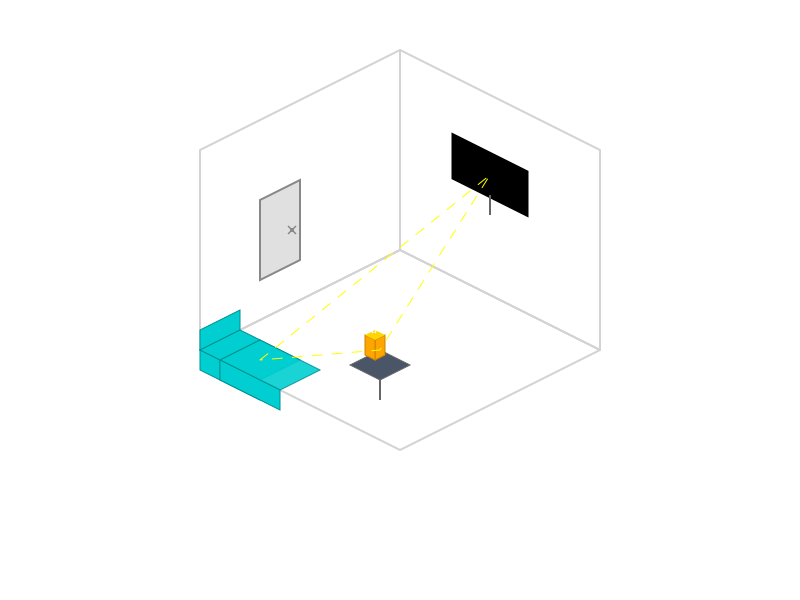
It’s a design philosophy that assumes we’d rather stay in than go out, that we’d rather scroll than socialize. And the more our physical environments reinforce this, the harder it becomes to break the cycle. The convenience curse isn’t just about what we do—it’s about the spaces we’ve built to do it in.
Masculinity in Crisis: The Secular Monk and the Need for ‘Neededness’
The Rise of the “Secular Monk”: Self-Improvement & Isolation
There’s a quiet revolution happening among young men, and it’s not the kind that makes headlines. Instead of chasing marriage, fatherhood, or even traditional career milestones, a growing number are retreating into what Andrew Taggart calls the “secular monk” lifestyle. These men aren’t joining monasteries, but they’re adopting a similar ethos: rigorous self-discipline, hyper-focus on personal optimization, and a deliberate withdrawal from the messy, unpredictable world of relationships. Their temples?
Cold plunges, meditation apps, and intermittent fasting protocols. Their congregations? Online forums where they swap biohacking tips instead of phone numbers. What’s fascinating—and deeply unsettling—about this trend is how it repackages isolation as empowerment.
These men aren’t just alone; they’re curating their aloneness, framing it as a virtue rather than a void. Derek Thompson’s conversation on The Art of Manliness podcast highlights how this phenomenon isn’t about laziness or apathy—it’s about control. By mastering their bodies, bank accounts, and daily routines, these secular monks are attempting to master the chaos of modern life. But here’s the catch: all that self-optimization doesn’t seem to be making them happier.
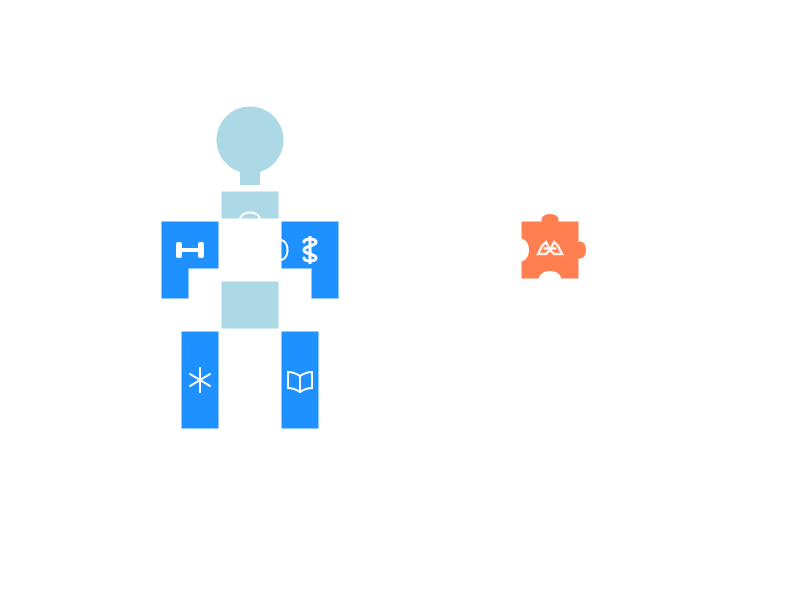
Depression, anxiety, and existential despair still lurk beneath the surface, proving that no amount of cold showers can replace the fundamental human need for connection. The irony is that this hyper-individualism often masks a deeper longing. Many of these men want to feel needed—they just don’t know how to ask for it. Richard Reeves, president of the American Institute for Boys and Men, nails it when he says men crave “neededness.”
They want to be essential, whether to a family, a community, or a workplace. But the secular monk’s path offers no such reciprocity. There’s no jigsaw piece fitting into a larger puzzle when your entire life is a solo project.
The result? A generation of men who are physically stronger, financially savvier, and more disciplined than ever—but emotionally adrift, wondering why their meticulously crafted lives feel so hollow.
The Crisis of Masculine Purpose and the Need for Connection
The crisis of masculinity isn’t just about loneliness—it’s about purpose. Richard Reeves’ research underscores a truth that’s been buried under decades of toxic masculinity: men don’t just want to be strong; they want to use that strength for something greater than themselves. The problem? Modern life has eroded the traditional avenues where men once found that sense of purpose.
Factories have closed, civic organizations have withered, and the nuclear family is no longer the default. Without these structures, men are left scrambling to find their place, often retreating into isolation rather than risking the vulnerability of connection. Reeves’ metaphor of the jigsaw piece is haunting. Every man wants to feel like he belongs somewhere, that his presence matters.
But the secular monk’s path—with its emphasis on self-sufficiency—actively resists this. When your identity is tied to being a lone wolf, admitting you need others feels like failure. The result is a vicious cycle: the more men isolate, the less they feel needed, and the more they double down on isolation to avoid confronting that emptiness. It’s a paradox that explains why so many young men celebrate canceled plans on TikTok or frame their solo lifestyles as “self-care.”
They’re not just avoiding socializing; they’re avoiding the terrifying possibility that no one would notice if they disappeared. The solution isn’t to force men back into outdated roles but to redefine what “neededness” looks like in the 21st century. Maybe it’s mentoring a younger colleague, volunteering in a community garden, or simply being the friend who shows up—consistently, without fanfare.
The Harvard Study of Adult Development has proven time and again that relationships are the key to long-term happiness and health. But for men, that truth is often buried under layers of pride and fear.
The secular monk’s discipline is impressive, but it’s a dead end if it doesn’t lead to connection. The real challenge isn’t mastering the self—it’s learning to need others, and to let them need you. 2
The Loneliness Loop: Why Single Men Are Stuck in Solitude
The data is damning: single men without children are drowning in solitary, sedentary leisure. Liana Sayer’s research reveals a stark divide—while women and married men still carve out time for social activities, unmarried men are overwhelmingly likely to spend their free hours alone, glued to screens. This isn’t just a preference; it’s a default setting. When there’s no partner or child demanding your attention, the path of least resistance isn’t a hike with friends or a community softball league—it’s another episode of The Boys, another round of Call of Duty, another scroll through the void of TikTok 1.
What’s worse, this isolation isn’t even making them happy. The dopamine hits from digital consumption provide temporary relief, but they leave men feeling emptier in the long run. The “healthy pinch of loneliness” that once drove humans to seek out tribe and kinship has been dulled by the endless buffet of solo entertainment. And yet, the stigma around male friendships persists.
Paul Kugelman’s story on Hidden Brain is a heartbreaking example: a man who wanted connection but found himself met with suspicion or indifference when he tried to reach out. The unspoken rules of masculinity—don’t be needy, don’t be vulnerable, don’t be too friendly with other men—create a prison of isolation. Even when men do attempt to break free, they’re often met with confusion or outright rejection. The convenience curse strikes again here.
Why risk the awkwardness of a gym buddy or the vulnerability of a heart-to-heart when you can get a similar dopamine rush from a YouTube rabbit hole? The answer isn’t to demonize screens but to recognize that they’re filling a void they were never meant to fill. The secular monk’s discipline and the sedentary loner’s escapism are two sides of the same coin—both are attempts to avoid the messy, rewarding work of human connection.
The question is, how do we make the harder choice—the choice to reach out, to show up, to let ourselves be needed—feel as compelling as the easy dopamine of solitude? Until we do, we’ll keep raising generations of men who are physically present but emotionally absent, surrounded by screens but starved for meaning.
The Three Rings of Social Connection: The Middle Ring’s Decline
The Decline of Middle Ring Relationships
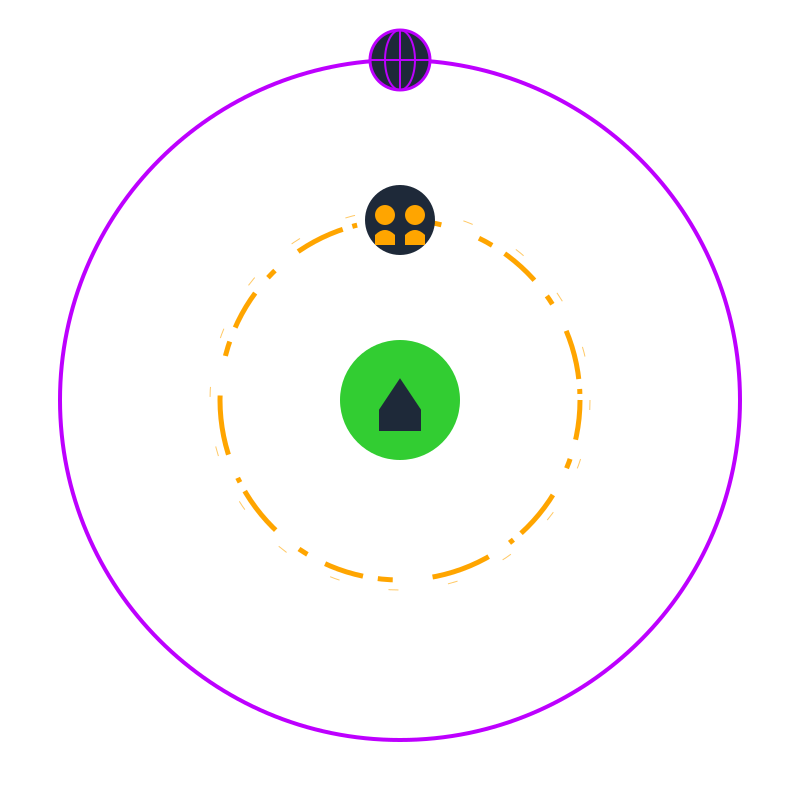
Marc Dunkelman’s three rings of social connection—inner (family), middle (neighbors/community), and outer (online tribes)—offer a compelling lens to understand modern isolation. The inner ring has tightened, with family bonds often deeper than ever. Meanwhile, the outer ring thrives in the digital age, where niche interests and global fandoms create instant, if superficial, connections. But the middle ring?
It’s crumbling. This erosion isn’t just about fewer block parties or casual chats over the fence. It’s about losing the practice of tolerance—the messy, unscripted interactions with people who aren’t like us.
When the middle ring weakens, we lose the muscle memory for civil disagreement, for navigating the gray areas of human coexistence. The result?
A society where politics feels like war and neighborly disputes escalate into online pile-ons. The middle ring isn’t just about convenience; it’s about the social fabric itself fraying.
The Decline of Middle Ring and Its Impact on Social Cohesion
The decline of the middle ring isn’t abstract—it’s playing out in real time. Take Nextdoor, the app that was supposed to revive neighborhood connections but instead became a digital battleground. Instead of knocking on a neighbor’s door to address a minor grievance, we now broadcast our frustrations to a faceless audience, inviting strangers to weigh in with outrage. The skill of talking it out has atrophied, replaced by the instant gratification of public shaming.
This isn’t just bad manners; it’s a symptom of a deeper loss. The middle ring taught us how to coexist with people who vote differently, parent differently, or even landscape their yards differently.
Without it, we’re left with two extremes: the echo chambers of the outer ring or the insularity of the inner ring. Neither prepares us for the work of democracy—or the basic decency of sharing a street.
The Nextdoor App and the Decline of Middle Ring Interactions
Nextdoor is the perfect case study in how we’ve outsourced conflict resolution to algorithms. In the past, a dispute over leaf-blowing might have ended with an awkward but productive conversation. Today, it’s a viral post, a thread of anonymous judgment, and a neighborhood divided.
The app didn’t create this dynamic—it just exposed how little practice we have in handling disagreement face-to-face. The middle ring’s collapse isn’t just about fewer PTAs or volunteer groups.
It’s about losing the habit of tolerance, the unspoken rules that once governed how we treated people who weren’t our best friends or blood relations. When that ring disappears, we’re left with a society that’s either hyper-connected online or painfully isolated offline—with no middle ground to teach us how to live together.
Rebuilding Social Fitness: Intentional Choices and Community Action
Social Fitness: The Intentional Choice Against Convenience
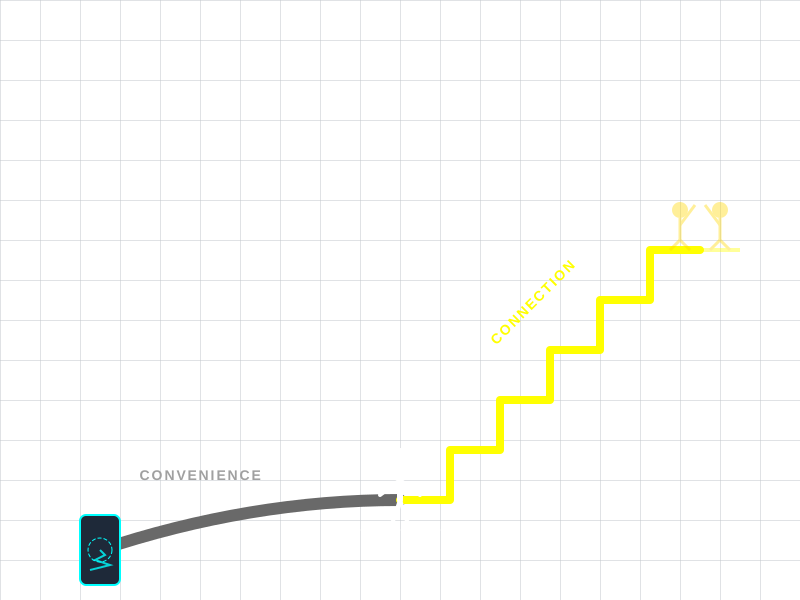
Modern life isn’t designed for social fitness—just like it isn’t designed for physical fitness. Our ancestors didn’t need gyms because their daily lives demanded movement. Today, we’ve engineered movement out of existence, and we’ve done the same with social interaction. The convenience curse has made it effortless to work, eat, and entertain ourselves without ever leaving the house.
But just as we’ve invented gyms to counteract sedentary lifestyles, we need to invent ways to counteract social atrophy. The solution isn’t complicated, but it requires intentionality. Derek Thompson puts it bluntly: “You don’t need any medical invention to spend time with other people. You don’t need any kind of invention at all.
You just need to choose.” That means treating socializing like exercise—something you do even when you don’t feel like it. It’s 6:00 PM, you’re tired, and the couch is calling. But just as you’d drag yourself to the gym, you drag yourself to a friend’s house.
The reward isn’t immediate, but it’s real. The problem is that modern life has made isolation the default, and breaking that default requires effort. It’s not about rejecting technology entirely but about being deliberate with how we use it.
The Amish don’t reject all technology—they evaluate it based on whether it aligns with their values. What if we did the same?
What if we wrote down our values—family, friendship, meaningful work—and only embraced technology that furthered those goals? It’s a radical idea, but it might be the only way to reclaim our social lives from the dopamine machines in our pockets.
Trade Phone Time for Friend Time
The key to rebuilding social fitness is to start small. Brett McKay suggests replacing just 15 minutes of mindless phone scrolling with outreach to a friend. It’s not about grand gestures—it’s about consistent, intentional choices. Text a friend to meet up.
Then text another. Then think about how to create a new habit that puts you around people instead of on your couch at 7:30 PM every night. The challenge is that this isn’t just an individual problem—it’s a collective one. If no one in your circle is hosting dinner parties, it’s harder to start the trend.
But someone has to go first. The alternative is a life where convenience trumps connection, where the path of least resistance leads to isolation. The good news is that small changes can have outsized effects. Independent bookstores and board game cafes are booming because they offer something screens can’t: shared physical space.
These third places—neither home nor work—are where community happens. They’re where we practice the art of conversation, where we learn to tolerate differences, where we remember that human connection isn’t just a nice-to-have but a need-to-have.
The decline of the middle ring of social connection—neighbors, community groups, casual acquaintances—has left us with a void. But we can fill it, one intentional choice at a time.
Reviving Community Through Bookstores and Board Game Cafes
The resurgence of independent bookstores and board game cafes isn’t just a nostalgic trend—it’s a rebellion against the convenience curse(/blog/do-hard-things#chronic-ease-the-dopamine-trap-of-modern-life)**. These spaces force us out of our homes and into the messy, rewarding world of face-to-face interaction. They’re modern-day agoras, where ideas are exchanged, friendships are forged, and the fabric of community is woven. The Amish approach to technology—embracing only what aligns with their values—offers a blueprint.
We don’t need to reject smartphones or streaming services entirely. But we do need to ask ourselves: Does this technology bring me closer to the people I care about, or does it pull me further away? The answer isn’t always clear, but the question is essential. The challenge is that rebuilding social fitness requires more than individual effort—it requires cultural shift. We need to normalize the idea that socializing isn’t just for extroverts, that it’s not a luxury but a necessity.
The Harvard Study of Adult Development has shown that relationships are the cornerstone of health and happiness. Yet we treat socializing like an optional extra, something to squeeze in if we have time. What if we treated it like exercise—non-negotiable, essential, life-sustaining?
The secular monk’s discipline is impressive, but it’s a dead end if it doesn’t lead to connection. The real challenge isn’t mastering the self—it’s learning to need others, and to let them need you.
Conclusion
So here we are, staring down a paradox: we’ve built a world where connection is easier than ever, yet we’re choosing isolation in record numbers. Not the kind that makes us lonely—just the kind that makes us… alone. And that might be the scariest part.
We’ve traded the “healthy pinch of loneliness” that once drove us to seek out tribe and kinship for the numb comfort of solo sedation. The secular monk’s discipline, the sedentary gamer’s escapism—it’s all the same story. We’ve built lives that don’t require other people, and now we’re wondering why they feel so hollow.
The convenience curse isn’t just about technology—it’s about how we’ve restructured our lives around solo, sedentary leisure. We’ve gained 300 hours of free time since the 1960s, and what did we do with it? We handed it over to screens. Not because we’re lazy, but because the alternative—actual human interaction—feels like a Herculean task when your brain is fried on dopamine hits from TikTok and Call of Duty.
The architecture of our living spaces reflects this shift: high ceilings and natural light have taken a backseat to the sacred triangle of couch, TV, and takeout. Our homes are designed for Netflix and chill, not for conversation pits or sunken living rooms where people actually talk to each other.
But here’s the thing: we’re not even lonely. We’ve just become accustomed to aloneness, mistaking it for contentment. The Harvard Study of Adult Development has proven time and again that relationships are the key to long-term happiness and health. Yet we treat socializing like an optional extra, something to squeeze in if we have time.
What if we treated it like exercise—non-negotiable, essential, life-sustaining? The secular monk’s discipline is impressive, but it’s a dead end if it doesn’t lead to connection. The real challenge isn’t mastering the self—it’s learning to need others, and to let them need you.
The decline of the middle ring of social connection—neighbors, community groups, casual acquaintances—has left us with a void. But we can fill it, one intentional choice at a time.
Independent bookstores and board game cafes are booming because they offer something screens can’t: shared physical space. These third places—neither home nor work—are where community happens. They’re where we practice the art of conversation, where we learn to tolerate differences, where we remember that human connection isn’t just a nice-to-have but a need-to-have.
So what’s the way forward? It’s not about rejecting technology entirely but about being deliberate with how we use it. The Amish don’t reject all technology—they evaluate it based on whether it aligns with their values.
What if we did the same? What if we wrote down our values—family, friendship, meaningful work—and only embraced technology that furthered those goals? It’s a radical idea, but it might be the only way to reclaim our social lives from the dopamine machines in our pockets.
The rise of tech-driven aloneness presents a unique challenge, particularly for young men. Recognizing the hidden costs of convenience, redefining masculinity, and actively rebuilding social fitness are crucial steps. By prioritizing intentional connection and community engagement, we can combat isolation and foster a more socially healthy future.
After all, the opposite of addiction isn’t sobriety—it’s connection. And in a world that’s increasingly designed to keep us apart, connection isn’t just a luxury. It’s a lifeline.


